

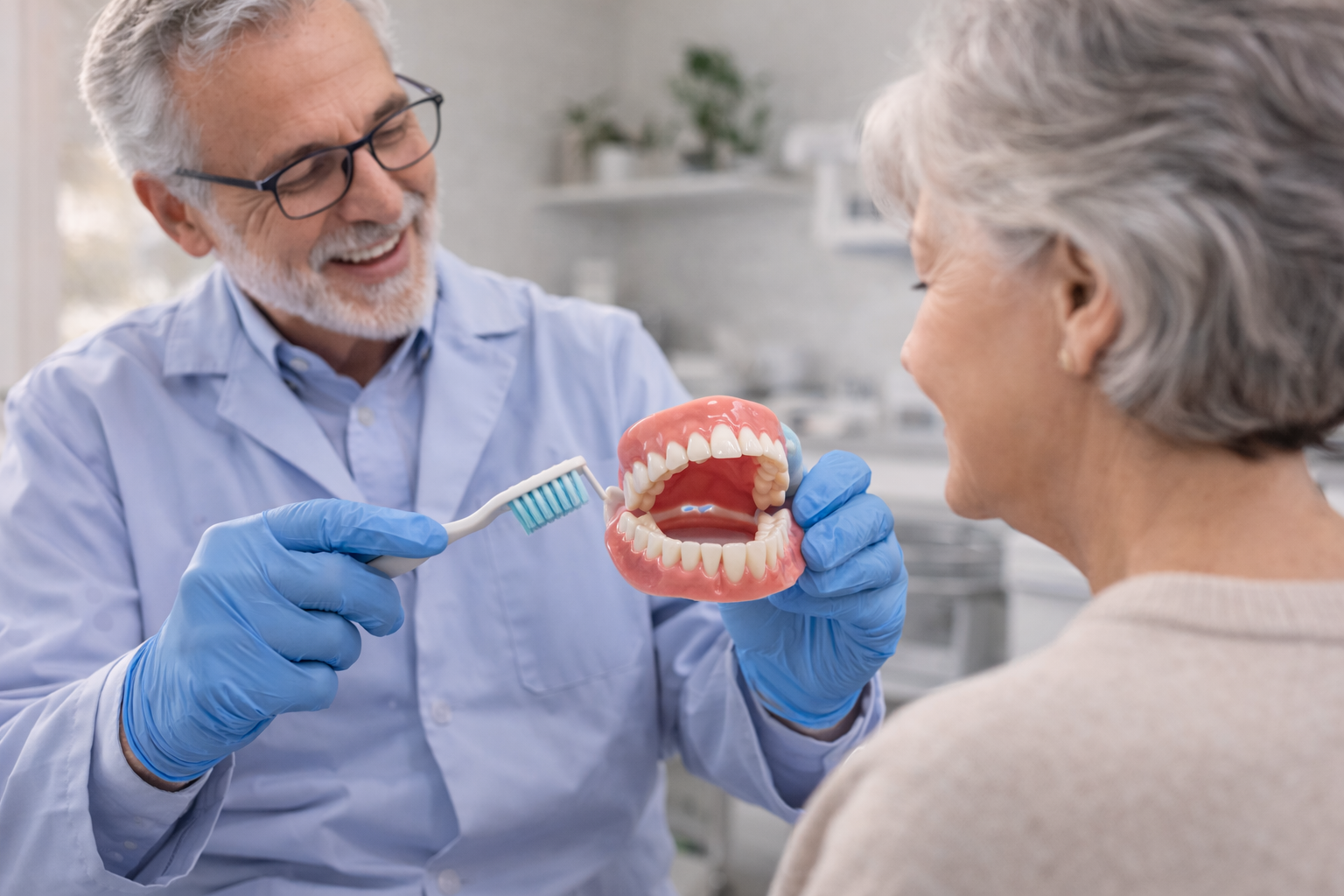
Denture comfort depends on more than just how well they fit. Proper daily care plays a critical role in protecting oral tissues and preventing irritation. At our clinic, we work closely with patients across Ottawa, Perth, Carleton Place, Smiths Falls, Kanata, Stittsville, and throughout Lanark County to ensure their dentures remain clean, stable, and supportive over time.
Many individuals assume that once dentures are placed, maintenance is minimal. In reality, dentures require consistent care to protect the delicate gum tissues beneath them. When denture hygiene or fit is neglected, gum irritation can develop gradually and lead to discomfort that interferes with eating, speaking, and overall quality of life.
In this article, we explain how proper denture care prevents gum irritation, why tissue health is so important, and what steps patients can take to maintain comfort long term.
Why Gum Health Still Matters After Tooth Loss
Even without natural teeth, the mouth remains a living, changing environment. The gum tissues beneath dentures are sensitive and require oxygen, circulation, and cleanliness to remain healthy.
When dentures rest against the gums throughout the day:
- Pressure is applied during chewing
- Friction occurs during speaking
- Moisture and warmth create an environment where bacteria can grow
Without proper hygiene and regular monitoring, these factors can irritate oral tissues.
Healthy gums are essential for stable, comfortable denture wear.
What Causes Gum Irritation in Denture Wearers?
Gum irritation does not happen randomly. It is typically caused by one or more of the following factors:
- Poor denture hygiene
- Bacterial buildup
- Ill-fitting dentures
- Prolonged denture wear without removal
- Dry mouth
- Excessive adhesive use
Understanding these causes allows patients to take preventive action.
The Role of Daily Denture Cleaning
Daily denture cleaning removes plaque, food debris, and bacteria that can irritate tissues. Even small amounts of buildup can cause inflammation over time.
Proper cleaning should include:
- Gentle brushing of the denture surface
- Cleaning of all grooves and contours
- Rinsing after meals
- Soaking as recommended
Regular cleaning helps prevent bacterial accumulation that may lead to redness and soreness.
Why Removing Dentures at Night Is Important
Continuous denture wear can restrict blood flow to gum tissues. Removing dentures at night allows:
- Oral tissues to rest
- Improved circulation
- Reduced bacterial growth
- Decreased risk of inflammation
Patients across Ottawa and surrounding communities who remove dentures nightly often experience fewer irritation issues.
The Impact of Ill-Fitting Dentures on Gum Tissue
As jawbone resorption occurs naturally over time, dentures may begin to lose their precise fit. When this happens:
- Pressure becomes uneven
- Certain areas experience excessive friction
- Sore spots may develop
- Inflammation may persist
Even well-made dentures require periodic adjustments or relines to maintain proper fit and prevent tissue irritation.
Signs of Gum Irritation to Watch For
Early signs of irritation are often mild and easy to overlook. Patients should monitor for:
- Redness beneath the denture
- Tender spots
- Burning sensation
- Swelling
- Small ulcers
- Persistent discomfort
Addressing these symptoms early helps prevent more serious complications.
The Role of Professional Denture Evaluations
Routine denture evaluations allow us to detect:
- Early pressure points
- Areas of excessive friction
- Changes in gum tissue
- Fit discrepancies
- Signs of infection
Regular checkups are especially important for patients in Perth, Kanata, and Lanark County who have worn the same dentures for several years.
Preventive care helps avoid chronic irritation.
Denture Stomatitis and Why Prevention Matters
Denture stomatitis is a common inflammatory condition caused by bacterial or fungal buildup beneath dentures.
It can cause:
- Red, inflamed tissue
- Discomfort
- Sensitivity
- Persistent soreness
Proper hygiene and professional cleanings significantly reduce the risk of this condition.
How Adhesive Misuse Can Contribute to Irritation
While denture adhesive can provide added security, excessive or improper use may trap bacteria or conceal fit problems.
Overuse may:
- Increase pressure on tissues
- Mask looseness that requires professional adjustment
- Contribute to irritation
Adhesive should support denture stability — not compensate for poor fit.
Dry Mouth and Tissue Sensitivity
Dry mouth is common among older adults and can increase the likelihood of irritation.
Saliva naturally:
- Cushions oral tissues
- Reduces friction
- Helps prevent bacterial overgrowth
When saliva production decreases, tissues become more vulnerable. Proper hydration and professional monitoring become even more important.
The Importance of Smooth Denture Surfaces
Over time, dentures may develop microscopic rough areas where bacteria accumulate more easily.
Professional cleanings help:
- Smooth minor roughness
- Remove hardened buildup
- Maintain a healthier surface
A smooth denture surface reduces friction and irritation.
Nutrition and Tissue Health
Good nutrition supports strong oral tissues. A balanced diet rich in vitamins and minerals helps maintain:
- Healthy circulation
- Faster healing
- Stronger tissue resilience
Properly fitted dentures make it easier to maintain good nutrition, creating a positive cycle of improved oral health.
How Relines Help Prevent Irritation
When dentures no longer fit properly due to gum changes, a reline reshapes the inner surface to match the current contour of the mouth.
Relines:
- Improve stability
- Distribute pressure evenly
- Reduce friction
- Prevent sore spots
Patients across Smiths Falls and Carleton Place often experience significant comfort improvement after relines.
Long-Term Benefits of Preventive Denture Care
Consistent care and monitoring help:
- Prevent chronic inflammation
- Reduce infection risk
- Extend denture lifespan
- Improve daily comfort
- Maintain confidence
Preventive denture care is far more effective than waiting until discomfort becomes severe.
Signs It Is Time for a Professional Assessment
Patients throughout Ottawa and Eastern Ontario should consider booking an evaluation if they notice:
- Persistent redness
- Increasing soreness
- Frequent irritation
- Dentures shifting more than usual
- Difficulty chewing comfortably
Early assessment allows us to correct issues before they worsen.
Our Commitment to Comfortable, Healthy Denture Wear
At Lima Denture and Implant Solutions, we prioritize long-term oral health and comfort. Our clinic proudly serves patients in:
- Ottawa
- Perth
- Carleton Place
- Smiths Falls
- Kanata
- Stittsville
- Lanark County
We provide comprehensive denture care, adjustments, relines, and maintenance to help prevent gum irritation and maintain healthy tissues.
Final Thoughts
Proper denture care is essential for preventing gum irritation and maintaining oral health. While dentures restore function and appearance, ongoing maintenance ensures they remain comfortable and supportive over time.
Healthy gums are the foundation of stable denture wear. Through daily hygiene, professional evaluations, and timely adjustments, irritation can be minimized and comfort preserved.
📞 Schedule Your Denture Evaluation
If you are experiencing gum irritation or want to ensure your dentures remain comfortable and healthy, we are here to help.
Lima Denture and Implant Solutions proudly serves patients across Ottawa, Perth, Carleton Place, Smiths Falls, Kanata, Stittsville, and Lanark County.
📞 (613) 728-5532
🌐 www.dentureclinicottawa.com
✉️ limadentures@gmail.com
We look forward to helping you maintain healthy gums and comfortable dentures.

