

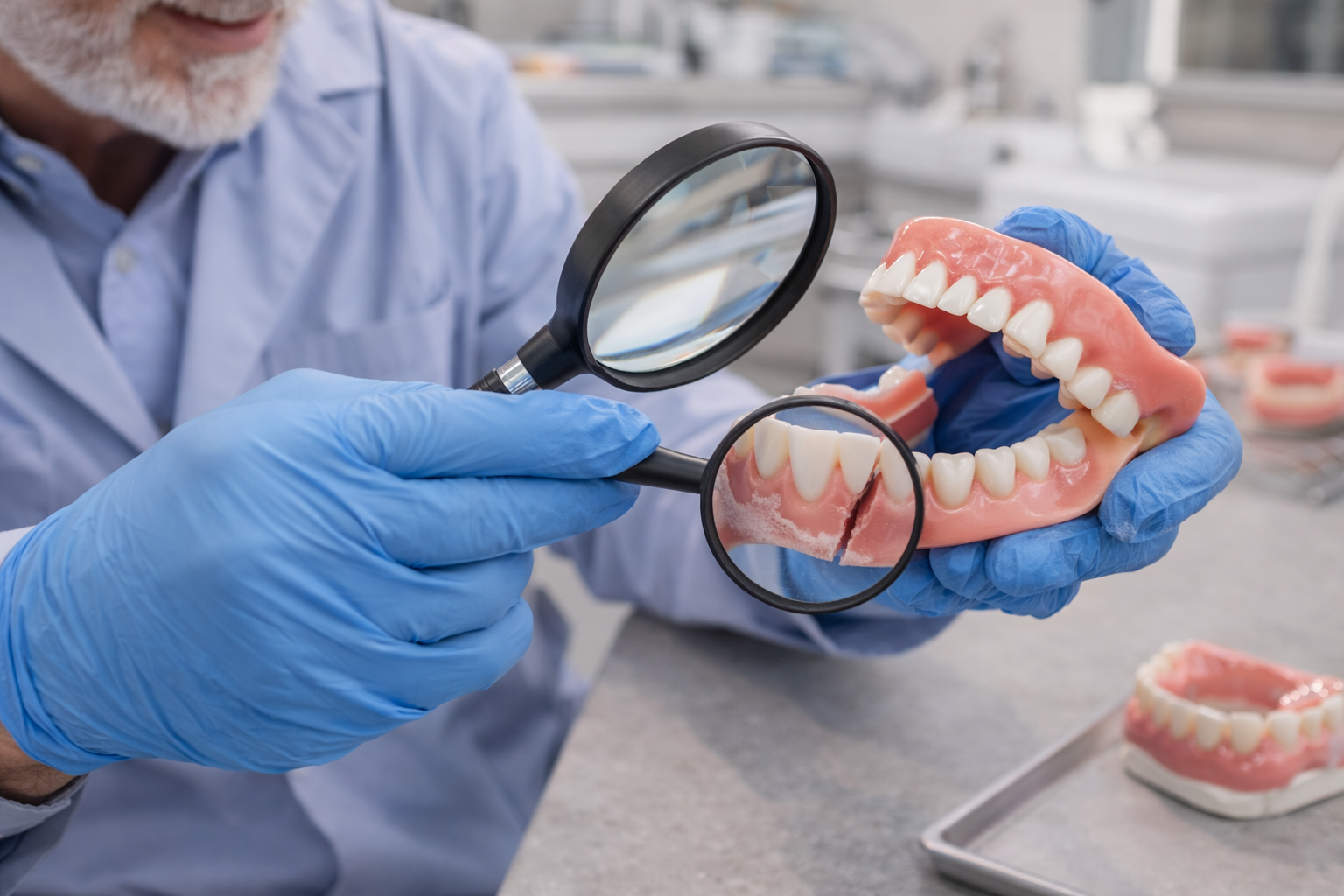
Dentures are designed to restore comfort, function, and confidence after tooth loss. With proper care, they can last many years. However, there comes a point when repairs are no longer the best solution, and replacement becomes the healthier and more effective option.
At our clinic, we regularly guide patients across Ottawa, Perth, Carleton Place, Smiths Falls, Kanata, Stittsville, and throughout Lanark County through this decision. Many people are unsure whether their dentures simply need a quick repair or if they have reached the stage where a full replacement is necessary.
In this blog, we explain the key differences between denture repairs and replacements, the warning signs to watch for, and how we determine the most appropriate solution for each patient.
Understanding the Difference Between Repair and Replacement
A denture repair is typically used when the denture is still structurally sound but has experienced a specific issue, such as:
- A minor crack
- A chipped tooth
- A broken clasp on a partial denture
- Small areas of wear
A replacement, on the other hand, is recommended when the denture no longer fits properly, functions well, or supports oral health due to long-term changes in the mouth or extensive wear.
The goal is always to choose the option that provides the greatest comfort, stability, and long-term benefit.
Why Dentures Cannot Last Forever
Even the highest-quality dentures are affected by:
- Daily chewing forces
- Natural wear of denture teeth
- Changes in gum tissue
- Ongoing jawbone resorption
- Aging of denture materials
Over time, these factors can reduce comfort and effectiveness, even if the denture appears intact.
Most dentures last approximately 5 to 7 years, though this varies depending on individual circumstances and maintenance.
Signs That a Repair May Be Enough
In many cases, a repair is the right solution when the denture still fits well overall.
Repairs are often appropriate if:
- The denture has a small crack but remains stable
- A tooth has chipped or come loose
- The denture broke due to an accident but fit was otherwise good
- The denture is relatively new and not worn down
When fit and function remain strong, repairs can restore the denture quickly and effectively.
Signs That Denture Replacement May Be the Better Option
Replacement is often recommended when problems go beyond a simple break or cosmetic issue.
Here are the most common indicators that dentures should be replaced rather than repaired.
1. Dentures Feel Loose Even After Adjustments
If dentures consistently feel loose, it is often due to gum and bone changes rather than damage to the denture itself.
Loose dentures can lead to:
- Difficulty chewing
- Increased adhesive use
- Movement during speech
- Chronic irritation
When looseness is caused by significant jawbone change, replacement may provide better long-term stability than repeated repairs.
2. Denture Teeth Are Severely Worn Down
Denture teeth wear gradually over time, which can affect:
- Chewing efficiency
- Bite alignment
- Facial support
- Comfort
Flattened or worn teeth often indicate that dentures have reached the end of their functional lifespan. In these cases, replacement restores proper bite height and improved function.
3. Bite Height Has Collapsed
As denture teeth wear down, the vertical dimension of the bite can decrease. This is known as bite collapse.
Bite collapse can cause:
- Jaw fatigue
- Facial sagging
- Increased wrinkles around the mouth
- Difficulty chewing
- Clicking or shifting dentures
Replacement is often necessary to restore proper alignment and facial structure.
4. Frequent Repairs Are Needed
If dentures require repeated repairs, it may be a sign that the materials are weakening.
Frequent breakage can occur due to:
- Aging acrylic
- Stress fractures
- Poor fit creating uneven pressure
Replacing dentures often becomes more cost-effective and reliable than ongoing repairs.
5. Chronic Sore Spots or Irritation
Recurring sore spots are often caused by dentures that no longer match the shape of the gums.
If irritation persists despite adjustments or relines, replacement may be required to restore comfort and protect oral tissues.
Chronic irritation should never be ignored, as it can lead to inflammation and infection.
6. Dentures Are More Than 7 Years Old
Age alone does not always mean replacement is required, but dentures older than 7 years often show:
- Material wear
- Reduced fit accuracy
- Bite imbalance
- Increased staining or odour retention
At our clinic, we recommend routine evaluations so patients know when replacement may be beneficial.
7. Facial Support Has Changed
Dentures provide structural support to the cheeks and lips. When dentures become worn or ill-fitting, facial changes may occur, including:
- Sunken cheeks
- Thinner lips
- A shortened lower face
Replacement can restore facial balance and improve overall appearance and comfort.
8. Relines No Longer Improve Fit
Relines are an excellent solution for many patients, but there are cases where the denture has worn too much for relines to remain effective.
If a denture has undergone multiple relines and still feels unstable, replacement may be the best option.
How We Determine the Best Solution
When patients visit us from Ottawa, Perth, or surrounding communities, we assess several key factors:
- Denture fit and stability
- Condition of denture teeth
- Bite alignment
- Tissue health
- Bone and gum changes
- Structural integrity of the denture
Our recommendations are always based on what will provide the greatest comfort and long-term success.
Why Replacement Can Be a Positive Upgrade
Many patients worry that replacing dentures is a setback. In reality, replacement is often an opportunity to benefit from:
- Improved comfort
- Better chewing efficiency
- Enhanced stability
- More natural appearance
- Updated materials and design
Modern dentures can offer a significantly better experience than older sets.
Preventing Denture Problems Through Routine Care
Regular evaluations help prevent emergencies and allow small issues to be addressed early.
Routine care helps:
- Extend denture lifespan
- Reduce repair frequency
- Maintain oral tissue health
- Identify when replacement is approaching
Patients who attend regular checkups often enjoy better long-term outcomes.
Signs It Is Time to Book an Assessment
Patients across Carleton Place, Smiths Falls, Kanata, and Lanark County should consider an evaluation if:
- Dentures feel loose
- Adhesive use has increased
- Chewing has become difficult
- Dentures are worn or damaged
- Facial structure feels different
- Dentures are more than 5–7 years old
Early assessment allows us to determine whether repair, reline, or replacement is most appropriate.
Final Thoughts
Knowing when dentures should be replaced instead of repaired is essential for long-term comfort, oral health, and confidence. While repairs can solve minor problems, replacement becomes necessary when fit, function, and structural integrity are no longer sufficient.
At our clinic, we are committed to helping patients across Ottawa and Eastern Ontario make informed, comfortable decisions about their denture care.
📞 Book a Denture Assessment Today
If you are unsure whether your dentures need a repair or a full replacement, we are here to help.
Lima Denture and Implant Solutions proudly serves patients across Ottawa, Perth, Carleton Place, Smiths Falls, Kanata, Stittsville, and Lanark County.
📞 (613) 728-5532
🌐 www.dentureclinicottawa.com
✉️ limadentures@gmail.com
We look forward to helping you restore comfort, function, and confidence with the right denture solution.

