

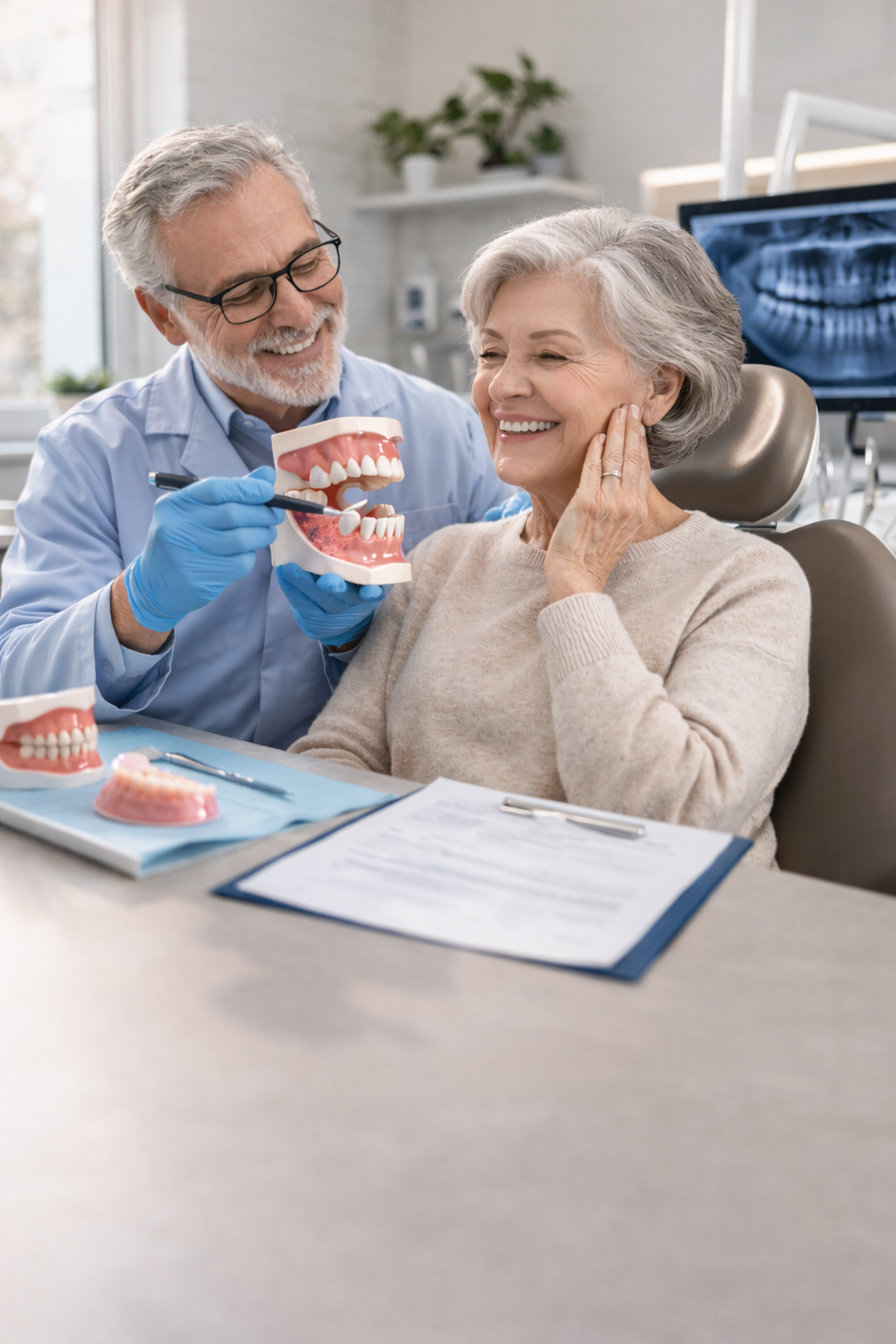
One of the most important — yet often misunderstood — reasons dentures become loose or uncomfortable is natural jawbone change over time. At our clinic, we regularly help patients across Ottawa, Perth, Carleton Place, Smiths Falls, Kanata, Stittsville, and throughout Lanark County understand how these changes affect denture fit and what can be done to maintain long-term comfort and stability.
Many people assume that once dentures are made and fitted properly, they should remain the same forever. In reality, the mouth continues to change throughout life. Understanding this process helps patients take proactive steps to protect their oral health and avoid more complex issues later.
What Happens to the Jawbone After Tooth Loss?
When natural teeth are present, they stimulate the jawbone every time a person chews or bites. That stimulation keeps the bone strong and active. Once teeth are lost, that stimulation significantly decreases.
As a result, the body begins a natural process called bone resorption, where the jawbone gradually shrinks or loses density over time. This process:
- Begins shortly after tooth loss
- Continues slowly throughout life
- Affects everyone who wears dentures
- Changes the shape and height of the gum ridge
Bone loss is not a sign that something is wrong — it is a normal biological process. However, it has a direct impact on denture stability.
Why Jawbone Shrinkage Affects Denture Fit
Dentures are custom-made to fit the exact contours of the gums and jaw at the time they are created. When the jawbone changes shape, the denture no longer matches those contours precisely.
As the jawbone shrinks:
- The gum ridge becomes narrower
- The height of the jaw may decrease
- The denture loses close contact with the tissue
- Suction and retention are reduced
This is when patients begin to notice that dentures feel different than they used to.
Common Signs of Jawbone-Related Denture Changes
Patients across Ottawa and surrounding communities often report similar symptoms when bone resorption begins affecting their dentures.
These signs include:
- Dentures feeling loose or unstable
- Increased reliance on adhesive
- Clicking sounds while speaking
- Movement during chewing
- Sore spots developing more frequently
- Difficulty eating certain foods
These issues may develop gradually, which is why they are often easy to overlook at first.
The Timeline of Bone Changes
Bone resorption does not happen all at once. The most significant changes typically occur in the first year after tooth loss, but the process continues slowly for many years.
In our experience serving patients in Perth, Kanata, and Lanark County, we commonly see:
- Noticeable fit changes within 1–3 years
- Progressive looseness over 5+ years
- More dramatic changes if dentures are not relined
Regular denture evaluations help monitor these changes before they cause discomfort.
How Jawbone Changes Affect Facial Structure
Jawbone shrinkage does not only affect denture fit — it also affects facial appearance.
As bone height decreases:
- The lower face may appear shorter
- Lips may lose support
- Cheeks can look more sunken
- Wrinkles around the mouth may deepen
Well-fitting dentures help restore facial support, but when bone changes occur and dentures are not adjusted, these structural effects become more noticeable.
Maintaining proper denture fit helps preserve natural facial contours.
Why Proper Denture Maintenance Is Essential
Because bone resorption is ongoing, dentures require periodic updates. Without maintenance, fit issues can lead to:
- Uneven pressure on gums
- Increased tissue irritation
- Faster bone loss
- Reduced chewing efficiency
- Jaw muscle fatigue
At our clinic, we emphasize preventive care to help patients avoid these complications.
The Role of Denture Relines
One of the most effective ways to address jawbone changes is through a denture reline.
A reline involves reshaping the inner surface of the denture so it matches the current contour of the gums. This:
- Restores stability
- Improves suction
- Reduces movement
- Relieves pressure points
- Extends denture lifespan
Many patients are surprised at how dramatically comfort improves after a professional reline.
When Denture Replacement May Be Necessary
In some cases, bone changes combined with denture wear make replacement the better option. This is typically recommended when:
- Denture teeth are severely worn
- Bite height has collapsed
- Acrylic material is weakened
- Multiple relines no longer restore stability
Our goal is always to recommend the most conservative and effective solution based on each patient’s unique situation.
Implant-Supported Options and Bone Preservation
For some patients in Ottawa and surrounding communities, implant-supported dentures may be discussed as an option.
Dental implants provide stimulation to the jawbone, which helps:
- Slow further bone loss
- Improve denture stability
- Increase chewing efficiency
- Reduce movement
While implants are not necessary for everyone, they can provide added support in certain cases where bone changes are more advanced.
Why Regular Denture Evaluations Matter
Because jawbone changes happen gradually, routine evaluations are critical.
We recommend annual denture checkups to:
- Assess bone-related fit changes
- Evaluate tissue health
- Adjust bite alignment
- Identify early pressure areas
- Determine if a reline is needed
Patients who attend regular evaluations often maintain comfort longer and avoid emergency repairs.
How Nutrition and General Health Play a Role
General health can influence the rate of bone resorption. Factors such as:
- Age
- Hormonal changes
- Medication use
- Overall bone density
- Nutritional habits
can all contribute to how quickly jawbone changes occur.
This is another reason personalized denture care is important. Every patient’s situation is different.
Signs It May Be Time for a Denture Assessment
Patients across Carleton Place, Smiths Falls, and surrounding areas should consider booking an evaluation if they notice:
- Increased denture looseness
- Daily adhesive use
- Difficulty chewing comfortably
- Recurring sore spots
- Changes in facial appearance
- Dentures that are more than 5 years old
These signs do not necessarily mean new dentures are required — but they do indicate that fit should be reassessed.
Preventing Long-Term Complications
Ignoring jawbone-related denture changes can lead to:
- Accelerated bone loss
- Chronic gum irritation
- Reduced stability
- Higher likelihood of denture fractures
- Decreased quality of life
Addressing small changes early helps prevent these outcomes.
Our Approach to Managing Jawbone Changes
At our clinic, we take a comprehensive and patient-focused approach. We:
- Monitor fit carefully over time
- Recommend relines when appropriate
- Assess bite alignment
- Provide guidance on adhesive use
- Discuss long-term options when needed
Our goal is to help patients across Ottawa and Eastern Ontario maintain a secure, comfortable denture fit for as long as possible.
Final Thoughts
Jawbone changes are a natural part of life after tooth loss, but they do not have to compromise comfort or confidence. With proper monitoring, timely relines, and professional guidance, dentures can continue to function effectively for many years.
Understanding how jawbone resorption affects denture fit empowers patients to take proactive steps instead of waiting for discomfort to worsen.
📞 Book a Professional Denture Evaluation
If you are experiencing changes in how your dentures fit, or if it has been some time since your last evaluation, we are here to help.
Lima Denture and Implant Solutions proudly serves patients across Ottawa, Perth, Carleton Place, Smiths Falls, Kanata, Stittsville, and Lanark County.
📞 (613) 728-5532
🌐 www.dentureclinicottawa.com
✉️ limadentures@gmail.com
We look forward to helping you maintain comfort, stability, and confidence with properly fitted dentures.

